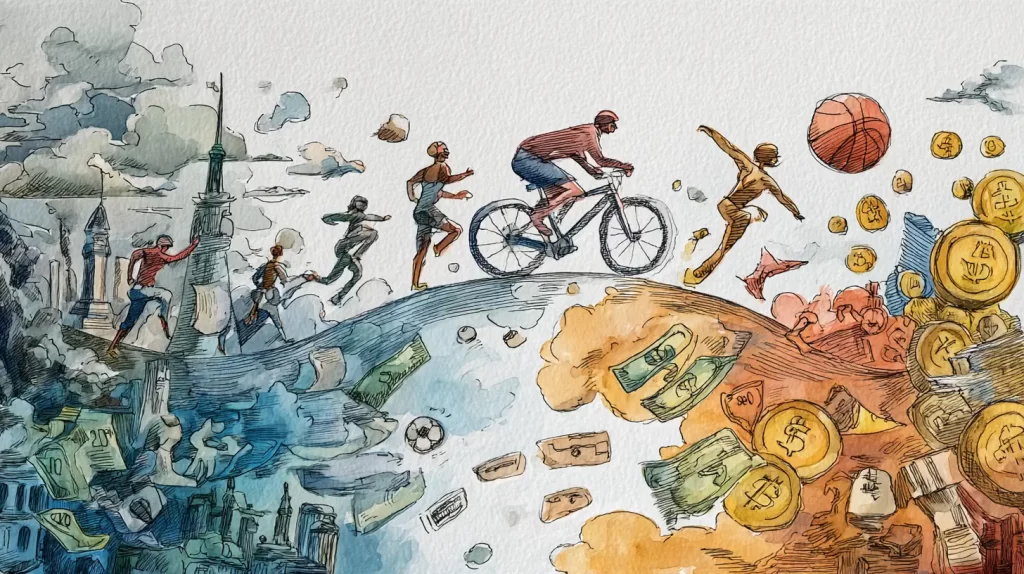
If you ask someone what sport does for them, they’ll probably tell you how it makes them feel good, how it contributes to their physical and mental health. For sports professionals, they’ll tell you it’s life and a career.
For the hobbyists playing recreational football on a weekday evening, it’s potentially a social opportunity, maybe the one time in a week they truly get to switch off and socialise.
Sport is many things to many people. But it’s also a really significant contributor to the economy and here’s how.
Gambling Revenues
Around sport, there’s a significant betting and gambling industry which employs thousands. According to recent gambling statistics from a 2025 survey, around a quarter of adults in the UK engage in online sports betting at least once a month.
There are around 100,000 people employed in the gambling industry in the UK and it is estimated that industry contributes £4.2bn in tax alone.
With sports betting a big part of that, it’s a significant contributor to the economy and jobs market.
Event Tourism and Hospitality
Big sporting events, whether that’s Wimbledon, the London Marathon or just a regular Premier League match, bring fans and money into towns and cities. When there’s a major tournament on, you get visitors from all over the world booking hotels, eating out, and travelling around.
This creates a real boost for hotels, pubs, restaurants, and shops. According to VisitBritain, sports tourism brings in over £2.3bn a year. That’s a lot of jobs in hospitality, travel, and retail. It doesn’t stop when the event is over, either. Sometimes these visitors come back later for holidays or to see more of what the city has to offer.
Sports Goods and Retail
When you look at the kit, trainers and equipment needed for all sorts of sports, it’s clear this is a major part of the UK’s retail sector. From parents buying boots for their kids, to runners upgrading their trainers, people spend a lot on sports gear.
The sports retail market is worth more than £11bn in the UK. That keeps high street shops busy, supports online sales, and means jobs in everything from manufacturing to delivery. There’s also a lot of growth in sportswear as people look for better quality, performance and even more sustainable options.
Broadcasting Rights and Media
Live sport is still a huge draw for TV and digital media. Broadcasters pay big money to show the Premier League, the Olympics, and loads of other competitions. This money goes back into the clubs and sports themselves, helping to pay for players, staff and new facilities.
There’s also a knock-on effect for the wider media industry. TV, radio, websites, and newspapers all rely on sport for content and advertising. In the UK, sports broadcasting alone is worth over £3bn and supports a huge number of jobs.
Community Infrastructure and Regeneration
Investment in sport often leads to bigger things than just new facilities. Building stadiums or sports centres can breathe new life into an area, create jobs for builders and staff, and give the community somewhere to come together.
It’s not just the big venues either. Funding for local clubs and pitches gives work to coaches and maintenance teams, helps bring people together, and supports local businesses. When new sports projects get off the ground, the benefits often spread through the whole neighbourhood.
Sport’s Contribution
Sport is so much more than just a game or a way to keep fit. It is a key contributor to our economy, playing a part in creating jobs, driving business for local communities and helping to shape towns and cities. Whether you are a player, a fan, or just someone who enjoys the buzz around big events, it is clear that sport brings lasting value to the UK in many ways. So, next time you watch a match or head out for a run, remember that you are also playing a small part in something much bigger.