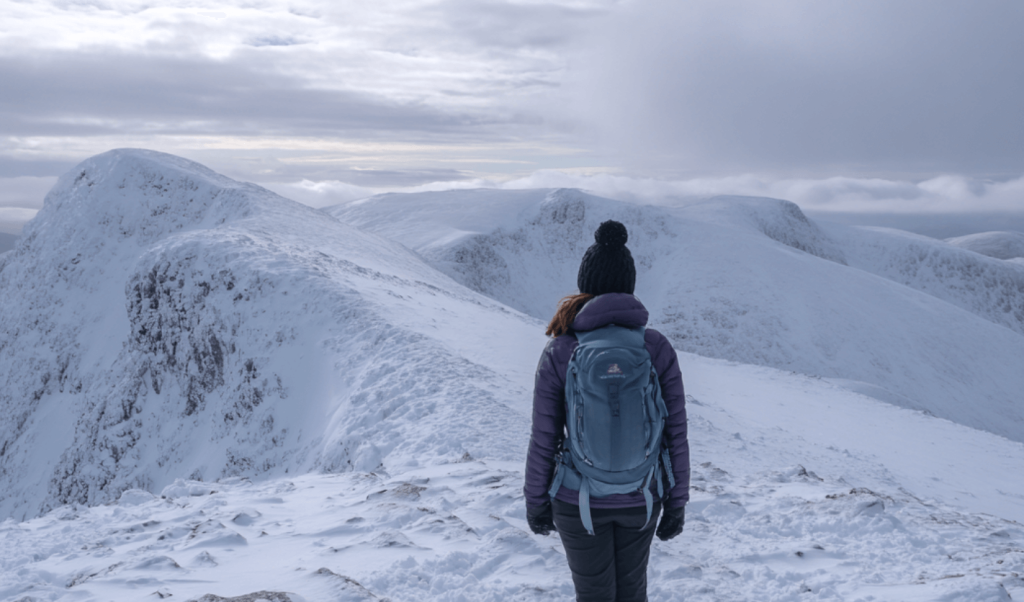
Winter walking in the UK can be absolutely magical. Crisp air, snowy summit and no b***ard midges. But it can also be an absolute nightmare underfoot if you’re not kitted out properly. If you’ve ever found yourself sliding around on a frozen path thinking “This was a terrible idea,” then you’re probably already wondering whether microspikes or crampons are the answer to your woes.
The short version? Both are brilliant in the right conditions. But they’re very different bits of kit, and choosing the wrong one can be anything from annoying to dangerous. So let’s break it down. What are microspikes, how do they compare to crampons, and which should you chuck in your rucksack this winter?
So… what actually are microspikes?
Microspikes are like the winter equivalent of putting chains on your tyres, only much smaller and for your feet. They’re stretchy rubber harnesses that fit over your boots or trail shoes, with small metal spikes (usually 3 to 10mm) linked by chains on the sole.
They’re designed to stop you from slipping on icy footpaths, frozen trails or compacted snow. Not for mountaineering. Not for ice climbing. Just good, honest, grippy winter walking.
Best for:
Icy pavements or trails
Low level snowy walks
Hillwalking where you’re not going near anything steep or sketchy – essentially, ideal for walks up well defined paths
And crampons?
Crampons are the big guns. They’re made for serious winter terrain. Think steep, snowy, icy ground like you get in the Scottish Highlands or the Alps. They attach to stiff soled winter boots using straps or bindings, and feature long, sharp spikes (usually 12 points or more) that bite into hard snow and ice.
They’re brilliant, but they’re overkill unless you’re heading somewhere that actually demands them.
Best for:
Steep winter routes
Snowy ridgelines
Icy gullies
Basically anything that gives you second thoughts when you see it
Microspikes vs Crampons: What’s the Difference?
| Feature | Microspikes | Crampons |
|---|---|---|
| Terrain | Icy trails, gentle hills | Steep, technical ground |
| Spikes | Short (3–10mm) | Long (10–20mm) |
| Boots needed | Flexible hiking boots or trail shoes | Stiff-soled winter boots (B2 or B3) |
| Weight | Light (300–400g) | Heavier (800g–1kg+) |
| Ease of use | On in seconds | Requires proper fitting |
| Cost | £40 to £60 | £100 to £200+ |
| Vibe | “I like walking in winter” | “I came here to suffer and I brought an axe” |
When I Use Microspikes
Personally, I love microspikes for most of my walks simply for ease of getting them on over whichever boots I happen to be wearing. I don’t typically scramble in winter and I don’t ice climb or anything. But you can find yourself on technical terrain on mountain hikes so I do keep them in the bag for those instances.
I’ll pop microspikes on for:
Winter walks in the Lakes or Peak District
Lower level routes in Scotland when there’s snow
Mountain routes in Scotland where there’s a well used path and no technical terrain
Hiking when conditions are icy but not technical
They’re especially handy on well trodden paths that have frozen solid, where you just need a bit of bite underfoot. And bonus, they make a very satisfying crunch as you walk.
When Crampons Are a Must
Crampons come out when things get serious. If I’m heading onto technical terrain in winter, tackling a ridge or gully or anywhere that’s steep and icy, then crampons (and an ice axe) are non-negotiable. You check out my full winter kit list here.
Crampons aren’t just about grip. They’re about safety. On hard snow, steep ground or mixed conditions, they give you the confidence to move properly. But they also demand respect. You need the right boots, the right fit, and ideally, a bit of training or experience to use them well.
Pros and Cons
Microspikes
✅ Super quick to put on
✅ Lightweight and packable
✅ Fits most boots or shoes
✅ Ideal for icy but easy-going terrain
❌ No good on steep or technical ground
❌ Can wear out quickly on rocky paths
Crampons
✅ Serious grip on serious terrain
✅ Built to last
✅ Essential for mountaineering
❌ Heavier and bulkier
❌ Only work with stiff-soled boots
❌ Can feel like overkill for casual walks
So, Which Should You Take?
That depends entirely on where you’re going. Here’s a rough guide.
If you’re sticking to low-level hills, icy trails or compacted snow, microspikes will do the job and save you carrying more than you need.
If you’re heading into proper winter mountaineering territory, crampons are the way to go.
And if you’re not sure? Sometimes I carry both. Microspikes for the walk in, crampons for the steep stuff. Better to have them and not need them than the other way round.
Final Thoughts
There’s a reason seasoned hillwalkers get a bit twitchy about winter. Conditions can change fast. Ice doesn’t care how experienced you are. And the stakes are higher when everything is slippery. But with the right kit and a bit of know-how, winter walking can be one of the most rewarding things you’ll ever do.
So don’t let the frost put you off. Choose the right traction, keep your route realistic and get out there.